Welcome back! So this is the second of my October - November catch-up posts, and the results from two trips out with the Pennsylvania boys. Based on the finds, it was pretty clear we were in a cavalry camp. I had a couple of good days, and my total results are pictured below before I talk about a few pieces in more detail.
The bullets are primarily Sharps, Spencer, and Burnside, the three most commonly used carbines during the Civil War, and all associated with cavalry units. The Sharps carbine used a paper cartridge, and I will have a lot more to say about them in an upcoming blog post. The Spencer and Burnside bullets used a brass cartridge. Below is a picture of two Burnsides (top) and two Spencers (bottom) all with remnants of the brass cartridge intact. The Burnsides are my very first of that type, and I always enjoy finding something I have never recovered before, even if their condition leaves a lot to be desired.
The combination of lead, brass, and gunpowder often leads to the corrosion of the thin brass walls of the cartridge in the ground over time. This, combined with destruction from farming activity, typically results in only the lead bullet (often corroded at the base) and the round base from the cartridge case being found separately. Occasionally when the case is separated from the bullet early enough and manages to evade the plow, a solid cartridge case can be found. I am still looking for my first complete brass cartridge and bullet together (and its pretty high on my wish list!) I was able to create several "reconstructed" Spencer cartridges from bullets and casings found in this field. Although they are obvious reconstructions, I think they turned out well enough, and portray what the complete cartridge would have looked like when it was dropped in that camp 150 years ago.
The brass wire fragments at the bottom right of the first picture are also associated with the weaponry of war. These are broken bore brushes or cleaning jags, used to clean the inside of the gun's barrel to prevent fouling. I have also included an image of a non-dug carbine bore brush from The Horse Soldier, with the bristles and leather strap (for passing through the barrel) intact.
This post has already started to get long winded (as I am wont to do), so I believe I will leave you in suspense about the big brass for now. So stay tuned to Detecting Saxapahaw for another catchup post from the Cavalry camp, and my finds from DIV XXXII! Until then, happy hunting and God bless!
Sunday, November 29, 2015
Saturday, November 21, 2015
Silver in Saxapahaw!
Wow, what can I say guys and gals. It's Relic Season, and I've been hitting it hard. I've been blessed with a streak of luck lately, so I've got lots of new things to share here on the blog. Rather than lump them all into one big unmanagble novel of a post, I will more likely break them up into several smaller posts. But that doesn't mean I'm going to stop digging, either! So keep checking back for more.
This past weekend I attended DIV 32 at Coles Hill in Stevensburg, Virginia. I will have much more to say about that in the near future. The finds were plentiful, including one hole that (in my opinion) turned out top be one of the top finds of my detecting career.
But first, I stopped by a site at home in Saxapahaw on the way out of town for a short pre-hunt to get me excited for some DIV action. The home town did not disappoint!
I got a couple neat finds, including my first movable type printing letter and one musket ball, along with a lot of trash. But two finds really stuck out above the rest. The first is this amazing eagle hood ornament. The condition is a little rough, but I think it is really cool. I'm not an expert, but my brief research shows that it was from 1931-1932 model Chevrolet cars. Now that's an old ornament! The style on it just really speaks to me, and I'm happy to have dug it. If any readers have more information on that car, I'd love to learn more.
The find of the hunt is smaller than a hood ornament - a LOT smaller. After plenty of trash targets, I was excited when one of my detectors high tones revealed the unmistakeable silver rim of an old coin in the hole. I carefully pulled it from its resting place, and instantly realized how tiny this coin was.
What I had discovered was an 1853 seated liberty half dime. "Now wait" I can hear you saying at home. "Isn't a half dime a nickel?"
Well, not always! The nickel five cent piece wasn't introduced until 1865 amid the silver shortages that followed the Civil War. Prior to that, five cent coins had been made of silver, called a half dime (or earlier, half disme.). These are tiny little coins, literally half the silver content of a dime. In fact, the half dime is considered by many to be the first official coinage produced by the United States back in 1792.
This seated liberty pattern of half dime was introduced in 1837 and continued until 1873. For the numismatists reading, this is the 1853 Philadelphia mint with stars and arrows, the most common of the four subtle design changes produced in that year.
Thanks again for checking out my blog, and stay tuned. I've got a big announcement coming up at the first of the year for an exciting new detecting adventure. And I'll keep the blog posts coming until then. Happy Hunting, and God Bless!
This past weekend I attended DIV 32 at Coles Hill in Stevensburg, Virginia. I will have much more to say about that in the near future. The finds were plentiful, including one hole that (in my opinion) turned out top be one of the top finds of my detecting career.
But first, I stopped by a site at home in Saxapahaw on the way out of town for a short pre-hunt to get me excited for some DIV action. The home town did not disappoint!
I got a couple neat finds, including my first movable type printing letter and one musket ball, along with a lot of trash. But two finds really stuck out above the rest. The first is this amazing eagle hood ornament. The condition is a little rough, but I think it is really cool. I'm not an expert, but my brief research shows that it was from 1931-1932 model Chevrolet cars. Now that's an old ornament! The style on it just really speaks to me, and I'm happy to have dug it. If any readers have more information on that car, I'd love to learn more.
The find of the hunt is smaller than a hood ornament - a LOT smaller. After plenty of trash targets, I was excited when one of my detectors high tones revealed the unmistakeable silver rim of an old coin in the hole. I carefully pulled it from its resting place, and instantly realized how tiny this coin was.
What I had discovered was an 1853 seated liberty half dime. "Now wait" I can hear you saying at home. "Isn't a half dime a nickel?"
Well, not always! The nickel five cent piece wasn't introduced until 1865 amid the silver shortages that followed the Civil War. Prior to that, five cent coins had been made of silver, called a half dime (or earlier, half disme.). These are tiny little coins, literally half the silver content of a dime. In fact, the half dime is considered by many to be the first official coinage produced by the United States back in 1792.
This seated liberty pattern of half dime was introduced in 1837 and continued until 1873. For the numismatists reading, this is the 1853 Philadelphia mint with stars and arrows, the most common of the four subtle design changes produced in that year.
Thanks again for checking out my blog, and stay tuned. I've got a big announcement coming up at the first of the year for an exciting new detecting adventure. And I'll keep the blog posts coming until then. Happy Hunting, and God Bless!
Monday, October 19, 2015
Ring Tells Its Story After 132 Years
Every item we find with our metal detectors has a story to tell. Unfortunately for us, we seldom have an opportunity to hear the whole truth. We are often left to speculate on the origins of our finds, making educated guesses based on the item itself, its location, and other objects found nearby. But every once in a detectorists life, we get a more complete view of a particular object. We often ponder, "If only these pieces of history could talk! What a story they could tell!" Every so often, it turns out, they actually can. This is the story of a very unique ring, which I will do my best to tell.
It started out as a fairly slow day searching along Saxapahaw Bethlehem Church Road (on private property with permission, of course). I had found some items of interest here before, spanning 200 years of history from the area once known as Oaks, NC. This day I hadn't found anything particularly noteworthy, just a few bits of older brass, and a cool old Regal lock. I was making my way back towards the road, getting ready to call it quits, when I got a solid low tone hit on my maching. "BOOO-WOO"!
I flipped the plug, and instantly recognized the shape of a ring on the bottom. It was a plain golden band, unadorned and classic in style. I wiped it off, and saw hallmarks present inside, but initially I wasn't even sure if it was solid or plated gold. It wasn't brass - there was no sign of oxidation, a characteristic of real gold. Even after a hundred years in the ground, it will come out as shiny as the day it was lost.
I posted several pictures on my personal Facebook account, and several detecting forums asking for opinions on the hallmarks. The first was the number 18, which I correctly assumed was the purity of gold in karats. The second mark was a crown, a British pictographic hallmark denoting gold. I was pleasantly surprised that most commentors not only believed that it was real gold, but that it had a very old look to the hallmarks. I brought the ring in to see an expert at a jewelry store in Chapel Hill that specializes in antique and estate pieces. They confirmed what I had already begun to suspect - the ring was genuine, and crafted sometime in the 19th century.
Here's where the story gets really interesting, though, because the ring had a secret that I hadn't shared yet on the forums. In addition to the hallmarks, the inside of the band was hand inscribed with (albeit fairly crude) cursive letters. It reads:
Having confirmed the 19th century construction, that meant the engraving of 83 meant 1883 - one hundred and thirty two years ago. Wow! Now the real digging began, trying to put real individuals together with this object. It was a time consuming task, but here is what I found.
George Whitfield Lasley was born August 13, 1850 to Cynthia Crutchfield and David Lasley of Oaks, Orange County, NC. Various documents have his name listed as either Lasley or Lashley. Mary Frances Duke, daughter of Henry and Isabella Duke was born near Greensboro, NC on November 11, 1857. By 1870, however, her family had relocated to Saxapahaw in Alamance county.
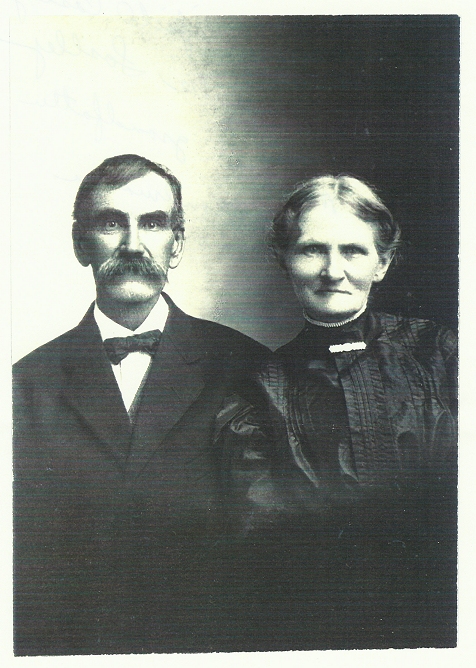
The two would be married July 29, 1884. They raised at least 6 children, and lived the remainder of their days here in Orange County. George worked as a carriage maker and farmed the land. George passed away in 1934 at the age of 83, and his wife followed just two years later. They are buried in the Bethlehem Church cemetery along the Orange an Alamance county line.
The ring presented from GWL to MFD in 1883 was likely a symbol of their betrothal to be married, a common practice at the time. Exactly when and how it came to rest under a cedar tree along the Saxapahaw and Bethlehem Church Road will remain a mystery. But Mary Frances Duke Lasley's ring can now once again see the light of day, and their story can be told. If you have any more information or additional photographs of Mary or George Lasley of Oaks, NC, please contact me at detsax@gmail.com
Thank you so much for reading (if you made it this far), happy hunting, and God bless.
It started out as a fairly slow day searching along Saxapahaw Bethlehem Church Road (on private property with permission, of course). I had found some items of interest here before, spanning 200 years of history from the area once known as Oaks, NC. This day I hadn't found anything particularly noteworthy, just a few bits of older brass, and a cool old Regal lock. I was making my way back towards the road, getting ready to call it quits, when I got a solid low tone hit on my maching. "BOOO-WOO"!
I flipped the plug, and instantly recognized the shape of a ring on the bottom. It was a plain golden band, unadorned and classic in style. I wiped it off, and saw hallmarks present inside, but initially I wasn't even sure if it was solid or plated gold. It wasn't brass - there was no sign of oxidation, a characteristic of real gold. Even after a hundred years in the ground, it will come out as shiny as the day it was lost.
Here's where the story gets really interesting, though, because the ring had a secret that I hadn't shared yet on the forums. In addition to the hallmarks, the inside of the band was hand inscribed with (albeit fairly crude) cursive letters. It reads:
GWL To MFD 83
"83" very lightly in center.
Having confirmed the 19th century construction, that meant the engraving of 83 meant 1883 - one hundred and thirty two years ago. Wow! Now the real digging began, trying to put real individuals together with this object. It was a time consuming task, but here is what I found.
Top: GWL
Bottom: MFD
Bottom: MFD
George Whitfield Lasley was born August 13, 1850 to Cynthia Crutchfield and David Lasley of Oaks, Orange County, NC. Various documents have his name listed as either Lasley or Lashley. Mary Frances Duke, daughter of Henry and Isabella Duke was born near Greensboro, NC on November 11, 1857. By 1870, however, her family had relocated to Saxapahaw in Alamance county.
North Carolina marriage register showing George and Mary Lasley
The two would be married July 29, 1884. They raised at least 6 children, and lived the remainder of their days here in Orange County. George worked as a carriage maker and farmed the land. George passed away in 1934 at the age of 83, and his wife followed just two years later. They are buried in the Bethlehem Church cemetery along the Orange an Alamance county line.
George and Mary Lasley, photo from FindAGrave memorial found here
The ring presented from GWL to MFD in 1883 was likely a symbol of their betrothal to be married, a common practice at the time. Exactly when and how it came to rest under a cedar tree along the Saxapahaw and Bethlehem Church Road will remain a mystery. But Mary Frances Duke Lasley's ring can now once again see the light of day, and their story can be told. If you have any more information or additional photographs of Mary or George Lasley of Oaks, NC, please contact me at detsax@gmail.com
Thank you so much for reading (if you made it this far), happy hunting, and God bless.
Wednesday, September 30, 2015
Buttons from Saxapahaw, bullets from Virginia
Hey everyone! I wanted to share some of my September finds with you all. I got a chance to go up to Virginia and detect with my good friend Dustin not too long ago. I did pretty well on bullets, but nothing else spectacular. Dustin had a great hunt, pulling both a rare button (Union eagle R rifleman coat) and his first Spanish silver (1792 two reale). Way to go man!
More recently, I took the GPX 4800 on a spin around Saxapahaw to try and cut through the harsh mineralization. I was very happy with its performance as usual, discriminating iron and pulling some nice old brass relics with ease. These are my finds for just a few hours hunting a spot I had previously given up on with other detectors.
The round ball is hard to date, but has a really nice pronounced sprue. The flat buttons date to the first half of the 19th century, the earliest timeframe for the site I was hunting. The two piece BS script button was for the uniform of the nearby Bingham School, although the backmark appears to date its production to just after the Civil War after the school had relocated to Mebansville.
Thanks for looking, happy hunting, and God bless.
Civil war bullets an button back,
Early civilian flat button
Dustin's 1792 two reale
The round ball is hard to date, but has a really nice pronounced sprue. The flat buttons date to the first half of the 19th century, the earliest timeframe for the site I was hunting. The two piece BS script button was for the uniform of the nearby Bingham School, although the backmark appears to date its production to just after the Civil War after the school had relocated to Mebansville.
Thanks for looking, happy hunting, and God bless.
Thursday, July 23, 2015
My First Spanish Silver!!
Hey everyone! I
recently took a road trip to do some detecting with the “Pennsylvania Boys”, my
buddies Keith and Tracy and my new friend Ethan. It was a beautiful day, although it was
blazingly hot in the sun by the end of it.
We all had a great time, and came away with a nice pile of relics.
We were detecting the site looking for Civil War relics, and we all found quite a few. The bullets were a mixture of dropped and fired rounds, mostly three-ringers and William’s cleaners. Much to my surprise, a little more than half (11 out of 20) of my three ring bullets had a Washington Arsenal star base stamp. My favorite is the high-impact Minie ball with the star base clearly visible. Another interesting first for me is a William’s cleaner type one with quite a bit of the zinc washer still intact. These typically corrode away with ground action, and finding the zinc remaining is rather uncommon.
One interesting byproduct of hunting for Civil War relics is that the soldiers marched, camped, and fought on the existing infrastructure of the day. It’s not at all uncommon to find artifacts that predate the Civil War mixed in, sometimes by 100 years or more. I found five civilian buttons that predate the war. The heavily corroded button is my first pewter button, which unfortunately lacks any front design. My favorite button that I found was a highly ornate tombac button with a star motif. The picture doesn’t do the level of detail any justice. Ethan also found a great button, a massive pewter button with what I think looks like a nautical motif.
I found the end of a very decorative spur, and I’m not sure about its use or age. It clearly doesn’t look military issue, but I don’t know enough about them to say if it’s from the Civil War era. It has the right look about it, though, and war found in the right area. Any help on that one would be most appreciated!
The find of the hunt for me, though, was this cut Spanish silver pistareen. This is my first Spanish silver, and my oldest coin to date by a long stretch. Although the date portion of the coin has been cut off, there is enough present to determine a date range. We can see most of the word “PHILIPPUS”, referring to Spain’s King Philip V, who ruled from 1700 to 1746. Foreign silver, especially Spanish silver, dominated the Americas for colonial trade, and all the way into the middle of the 19th century. The face value on the complete coin would have been 2 Reales, with 8 Reales being equivalent to one dollar. UPDATE: I received a reply from colonial silver expert Bill D. on a detecting forum, who further narrowed down the mint date of this coin. Because the assayers mark is present k. This piece, the coin was produced in Mexico City between 1733 and 1746. Thanks for the added information, Bill!
So how did it end up as only a fragment of a coin? Because the value of the coin was in the silver weight, making change for a purchase was often done by physically dividing the coin into pieces. The famous pirate “Pieces of Eight” refers to the subdivided pieces of an 8 Reale coin. In this case, the full 2 Reale coin was divided into four ½ reales (5 cents worth of silver for a pistareen) at some point in order to make change. With such complicated monetary exchanges, I have no idea how they kept it all straight! Fortunately that came to an end in 1857 with the passage of the Coinage Act, which forbade the use of foreign silver coins as legal tender. As it turns out, this wouldn’t be the only Spanish silver for the day – Keith also pulled a cut silver milled pillar reale coin towards the end of the hunt!
Thanks so much for reading, and thank you to Keith, Tracy, and Ethan for a fabulous day of detecting and fellowship. I had a blast, and I can’t wait to get together again soon!
Friday, June 26, 2015
Silver Spoon Update
Last night I posted my recent finds to a number of detecting forums that I frequent. I highly recommend posting your finds on such websites, because the large user base can provide an incredible wealth of crowdsourced historical information on just about any topic. As it would happen, I received an alternate ID for the maker's mark on my silver spoon, and after some more digging (hehe) I believe this to be more accurate.
I'm now confident that the spoon was crafted by Henry White of Fredericksburg, Virginia sometime before 1827. So it's not a colonial relic, but an artifact of the early American south. The next goal would be to definitively connect the monogram to the family who I believe the spoon belonged to. It's a long shot, but the research will be fun anyways. Another avenue of research would be to specifically ID the unit camped where the spoon was found - but I think that will require more literal digging. Looks like I've got some work to do!
Colonial Silver - Spoils of War?
Hey ya'll! I know it's been a while. I still have some cool stuff from way back in January that I haven't posted up here... but I'm working on it. But I just had to share this latest hunt with you all! I tried three new spots with my friend Dustin a few days ago. The first two didn't pan out, but persistence pays off!
I ended up with quite a few Civil War bullets, mostly Colt pistol. I'm not sure what the small carved bullet on the right started out as, but I always like finding carved lead. The three bullets on the left are for the Merrill carbine. We're hoping that we can use these less common (though I'd stop well short of saying rare) bullets combined with what we know of the site to narrow down whose camp we are in, of the several units who were known to have been in the area. The camp probably extends outward in one of three directions, but we will need permission from other landowners (and less vegitation!) before we can fully investigate.
As for brass, I found my second kepi hat buckle, two button backs, one incredibly fragile General Service eagle button, and two early flat buttons. One is a large copper button, fairly thin and plain. The other is a smaller, probably a bit later, and has a nice silver wash. It should clean up well. Dustin also found a beautiful silvered colonial dandy button with a star design, as well as some more Civil War relics.
Ok, enough suspense, on to the REALLY good stuff! My find of the hunt was this plow damaged silver spoon. Although the condition leaves a lot to be desired, It's one of my favorite recoveries of my detecting career. I searched for more pieces of the spoon bowl, but the ones I did find were scattered over a surprisingly large area by farming activity. The spoon handle has an ornate monogrammed letter "A". From our research into the site beforehand, we knew the family that owned the farm during the war lived in a nearby home since the late 1700's... and their surname started with that same letter "A". I think it is highly likely that the two are connected, but of course we will never know for certain.
The spoon is also hallmarked by the maker on the back - the letters "HW" in a rectangle with triangle cutouts on the sides. UPDATE: We initially thought this spoon was the work of a New York silversmith, but it turns out it was crafted more locally. It was made by Henry White of Fredericksburg, Virginia some time prior to 1827. What an incredible hobby!!
I'll close with one last bit of speculation. I do know approximately where the home site is located, and it is down the road a distance from the field we were detecting. It's likely that the early flat buttons we recovered were from farming activities in the fields over the years. It's also quite possible that the colonial spoon was lost in that field in a similar manner - the owners were having a meal in the field and it lay there for the next 200 years. But is there another explanation? I do have one primary source document that mentions that the house was looted by Yankee cavalry during the war. The stolen goods were returned, but is it possible that this silver spoon was taken as spoils of war and left in camp? I also know that the cavalrymen who did the looting were armed with Merrill carbines. So there is some evidence that lends credence to this theory. Of course, it is all speculation, and we will probably never know. But it is interesting to think about.
Thanks for reading, and stay tuned for more updates on past (and upcoming) expeditions into our nation's history. Stay safe, happy hunting, and God bless.
I ended up with quite a few Civil War bullets, mostly Colt pistol. I'm not sure what the small carved bullet on the right started out as, but I always like finding carved lead. The three bullets on the left are for the Merrill carbine. We're hoping that we can use these less common (though I'd stop well short of saying rare) bullets combined with what we know of the site to narrow down whose camp we are in, of the several units who were known to have been in the area. The camp probably extends outward in one of three directions, but we will need permission from other landowners (and less vegitation!) before we can fully investigate.
As for brass, I found my second kepi hat buckle, two button backs, one incredibly fragile General Service eagle button, and two early flat buttons. One is a large copper button, fairly thin and plain. The other is a smaller, probably a bit later, and has a nice silver wash. It should clean up well. Dustin also found a beautiful silvered colonial dandy button with a star design, as well as some more Civil War relics.
Ok, enough suspense, on to the REALLY good stuff! My find of the hunt was this plow damaged silver spoon. Although the condition leaves a lot to be desired, It's one of my favorite recoveries of my detecting career. I searched for more pieces of the spoon bowl, but the ones I did find were scattered over a surprisingly large area by farming activity. The spoon handle has an ornate monogrammed letter "A". From our research into the site beforehand, we knew the family that owned the farm during the war lived in a nearby home since the late 1700's... and their surname started with that same letter "A". I think it is highly likely that the two are connected, but of course we will never know for certain.
I'll close with one last bit of speculation. I do know approximately where the home site is located, and it is down the road a distance from the field we were detecting. It's likely that the early flat buttons we recovered were from farming activities in the fields over the years. It's also quite possible that the colonial spoon was lost in that field in a similar manner - the owners were having a meal in the field and it lay there for the next 200 years. But is there another explanation? I do have one primary source document that mentions that the house was looted by Yankee cavalry during the war. The stolen goods were returned, but is it possible that this silver spoon was taken as spoils of war and left in camp? I also know that the cavalrymen who did the looting were armed with Merrill carbines. So there is some evidence that lends credence to this theory. Of course, it is all speculation, and we will probably never know. But it is interesting to think about.
Thanks for reading, and stay tuned for more updates on past (and upcoming) expeditions into our nation's history. Stay safe, happy hunting, and God bless.
Subscribe to:
Posts (Atom)